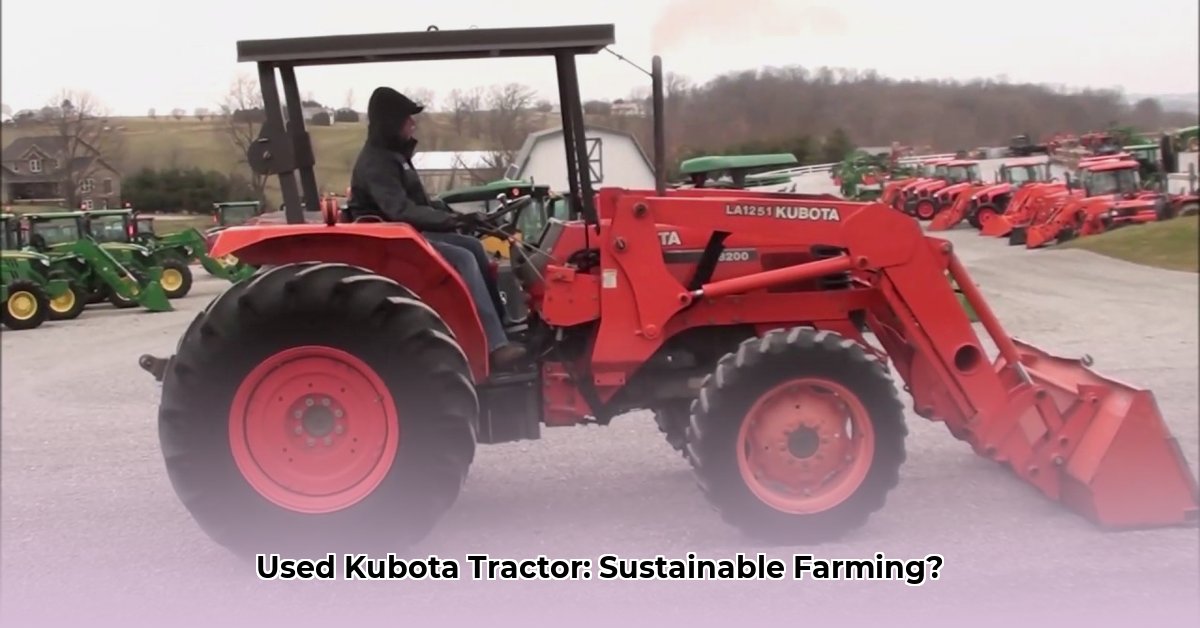
Thinking about purchasing a used 2000 Kubota tractor? This detailed review explores the sustainability aspects of owning this workhorse, weighing its longevity and cost-effectiveness against the challenges of parts availability and maintenance. We'll examine how this choice aligns with modern sustainable agricultural practices. For more information on Kubota tractor pricing, check out this helpful resource: Kubota Tractor Prices.
Longevity and Sustainability: A Double-Edged Sword
The Kubota L2000's reputation for durability is a significant draw for environmentally conscious farmers. Many L2000s continue operating decades after their manufacture, significantly reducing the environmental impact associated with frequent equipment replacement. This longevity minimizes resource depletion, manufacturing waste, and ultimately, the number of tractors ending up in landfills. However, this advantage is countered by the difficulties inherent in maintaining an older machine.
Is the extended lifespan of a used Kubota L2000 truly sustainable? The answer depends on a careful assessment of several factors, including the challenges of sourcing parts and the potential for increased emissions. How can you reconcile the environmental benefits of prolonged usage with the potential downsides?
Parts Availability and the Gray Market: Navigating the Challenges
Sourcing replacement parts poses a significant challenge. Finding genuine Kubota parts for a 2000 model can be time-consuming and expensive. The gray market, offering cheaper alternatives, presents ethical and legal concerns, as well as risks to safety and performance. Using counterfeit or substandard parts can lead to premature equipment failure, negating the environmental benefits of longevity. Furthermore, using unverified parts may void any remaining warranty.
Fuel Efficiency and Emissions: A Complex Equation
While the Kubota L2000's smaller engine might offer better fuel economy compared to newer, larger models, it's crucial to consider the inherent limitations of older diesel technology. While fuel consumption might be lower, the emission profile is likely less clean than modern tractors. A thorough assessment requires quantifying the balance between reduced fuel use and increased emissions. "The true environmental impact is complex," explains Dr. Anya Sharma, Agricultural Engineer at Cornell University. "It is not simply about fuel but also about overall emissions and the embodied energy in manufacturing new parts versus the cost of repairing the existing machinery."
Maintenance and the Cost of Longevity
Maintaining a Kubota L2000 demands meticulous preventative maintenance. Regular servicing, including oil changes and careful monitoring, prevents costly repairs and extends the tractor's lifespan. This proactive approach is a key element of sustainable ownership, ensuring the tractor remains operational and avoids premature disposal. "Regular maintenance," advises John Miller, a seasoned Kubota mechanic from Miller's Tractor Repair, "isn't just about saving money; it's about responsible stewardship of your equipment and the environment."
A Balanced Perspective: Pros and Cons Summarized
To assist in your decision, consider these key aspects of owning a used Kubota L2000:
Advantages:
- Exceptional Durability and Longevity: Significantly reduces the environmental impact of frequent equipment replacement.
- Lower Initial Purchase Price: Compared to newer models, offering cost savings.
- Potential for Fuel Efficiency: Smaller engine size might lead to lower fuel consumption than modern, larger tractors.
Disadvantages:
- Difficulty Sourcing Parts: Finding genuine Kubota parts can be challenging and expensive.
- Higher Maintenance Costs: Regular maintenance is crucial and can be more costly than newer model maintenance.
- Older Technology: Lacks advanced features found in modern tractors.
- Potential Emission Concerns: Older diesel engines may have less favorable emissions profiles than their modern equivalents.
Sustainable Ownership: A Practical Guide
To minimize environmental impact and maximize the lifespan of your Kubota L2000, follow these actionable steps:
- Thorough Pre-Purchase Inspection: Engage a qualified mechanic specializing in older Kubota models for a comprehensive evaluation.
- Strategic Parts Sourcing: Establish relationships with reputable Kubota dealers and explore reliable online sources and salvage yards for parts.
- Rigorous Preventative Maintenance: Adhere diligently to the recommended maintenance schedule to prevent costly repairs and extend the tractor's life.
- Responsible Disposal Planning: Research options for environmentally responsible disposal upon retirement of the tractor.
The 2000 Kubota L2000 presents a unique sustainability challenge. Its longevity offers substantial environmental benefits if balanced with diligent maintenance and a proactive strategy for parts sourcing and long-term disposal planning. Informed decision-making and responsible ownership are crucial for integrating this older machine into a sustainable agricultural operation.